

Shungite
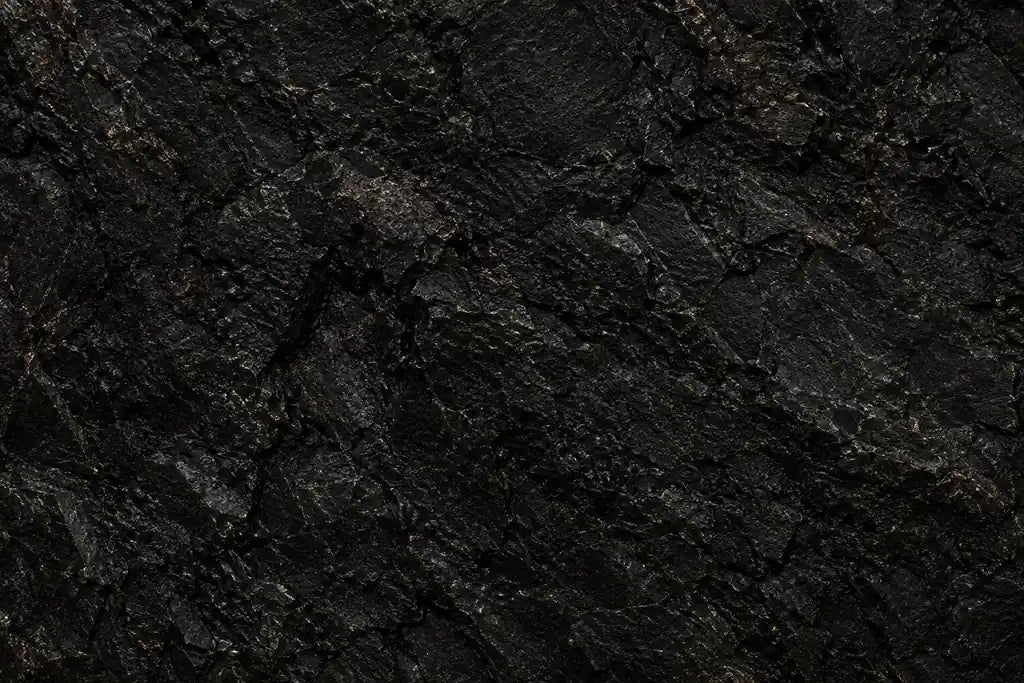
black. Matt when raw, with silver-grey highlights when polished.

The black of shungite is carbon: the more of it the stone contains, the shinier it becomes, almost metallic.
Karelia is a region of north-west Russia, on the border with Finland.
It is a land of forests and large lakes, such as Ladoga and Onega.
The name comes from Shunga, the village where shungite was first described.
The world's main deposit is near Lake Onega: this is one reason why shungite is rare.
Shungite formed in Karelia around two billion years ago.
Unlike graphite and diamond, its carbon is not crystalline: it is a form of its own.
The purest kind exceeds 98% carbon; the others combine it with quartz and other minerals.
In 2006 a scientific symposium was devoted to it: “Shungite and the safety of human life”. It is also called “the stone of life”.
The symposium highlighted these properties: protection from radiation; it densifies the vital field; it has the ability never to become negatively charged; it purifies and energises water.
It is valued for its ability to eliminate and absorb anything that poses a danger to people and living beings, for example by shielding harmful electromagnetic radiation of any origin, including radioactive.
Fullerenes are special spherical carbon molecules, like tiny hollow spheres. The best known is C60, also called the “buckyball”.
Its discovery in the laboratory, in 1985, earned the 1996 Nobel Prize in Chemistry.
In 1992 fullerenes were found in a rock for the first time: Karelian shungite.
In shungite, fullerenes occur naturally, thanks to its unique structure and ancient geological origin: they are the result of millions of years of pressure, temperature and time.
The presence of fullerenes makes shungite a mineral unique in the world.
They help to neutralise free radicals and contribute to reducing the impact of electromagnetic radiation.
Alongside fullerenes, shungite contains trace elements: minerals present in small amounts.
black. Matt when raw, with silver-grey highlights when polished.

silver and graphite in colour, with metallic highlights. It is always raw.
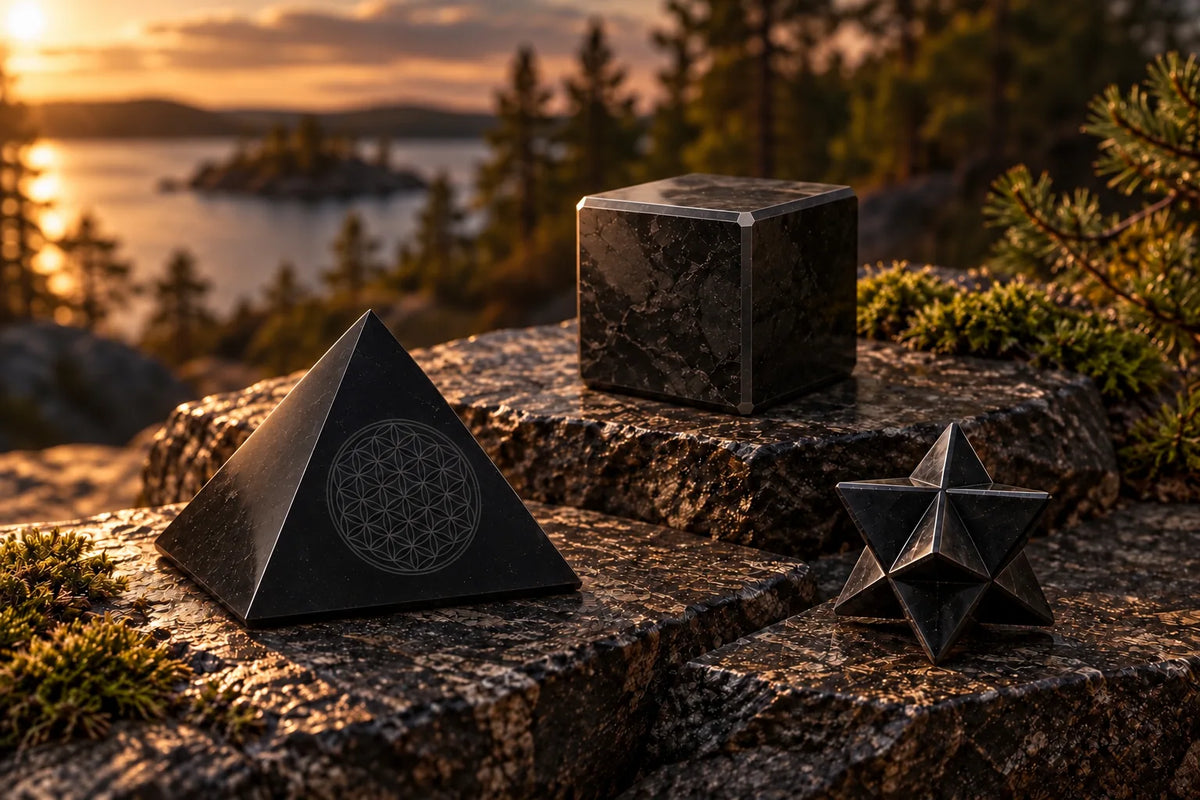
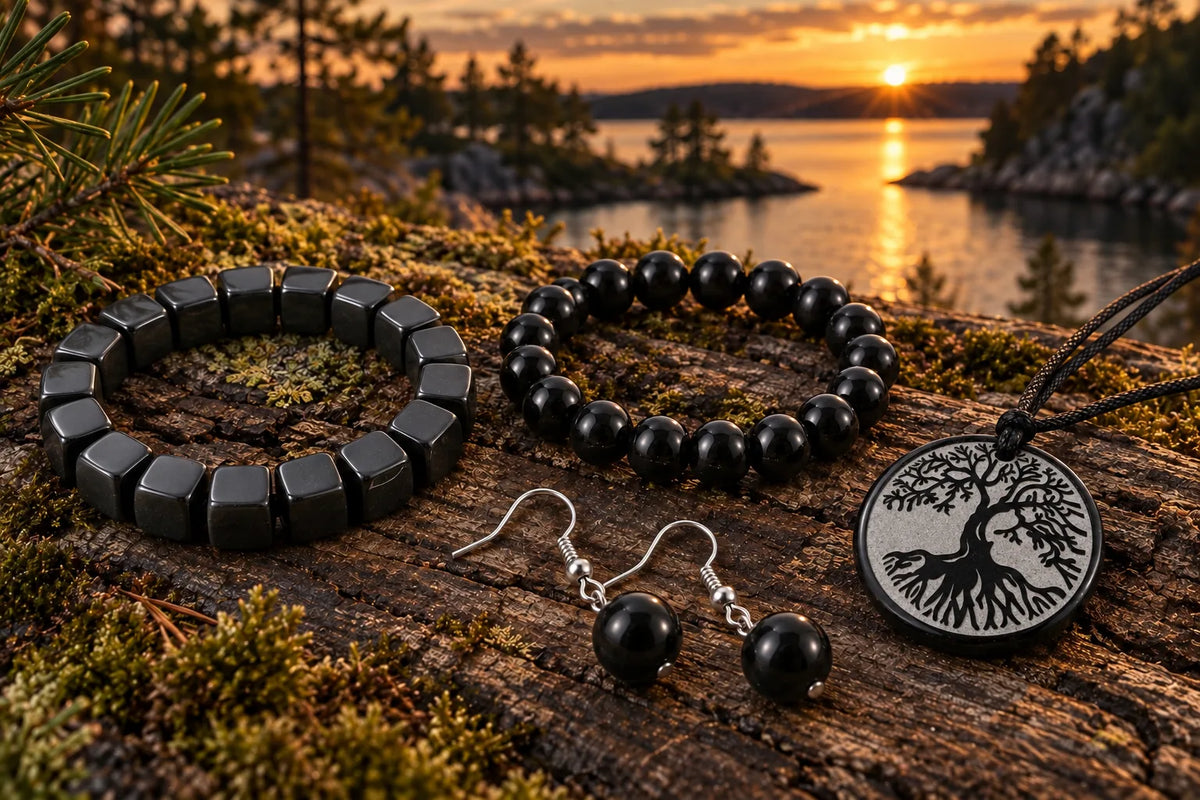
The shapes and almost all the jewellery are made from shungite.
Élite is extremely rare: it is less than 1% of all the shungite mined. It has run out, and its quarries have been officially closed.

These are traditional uses, not medical advice: they are no substitute for medical treatment.


the unworked stone, with its natural fractures.

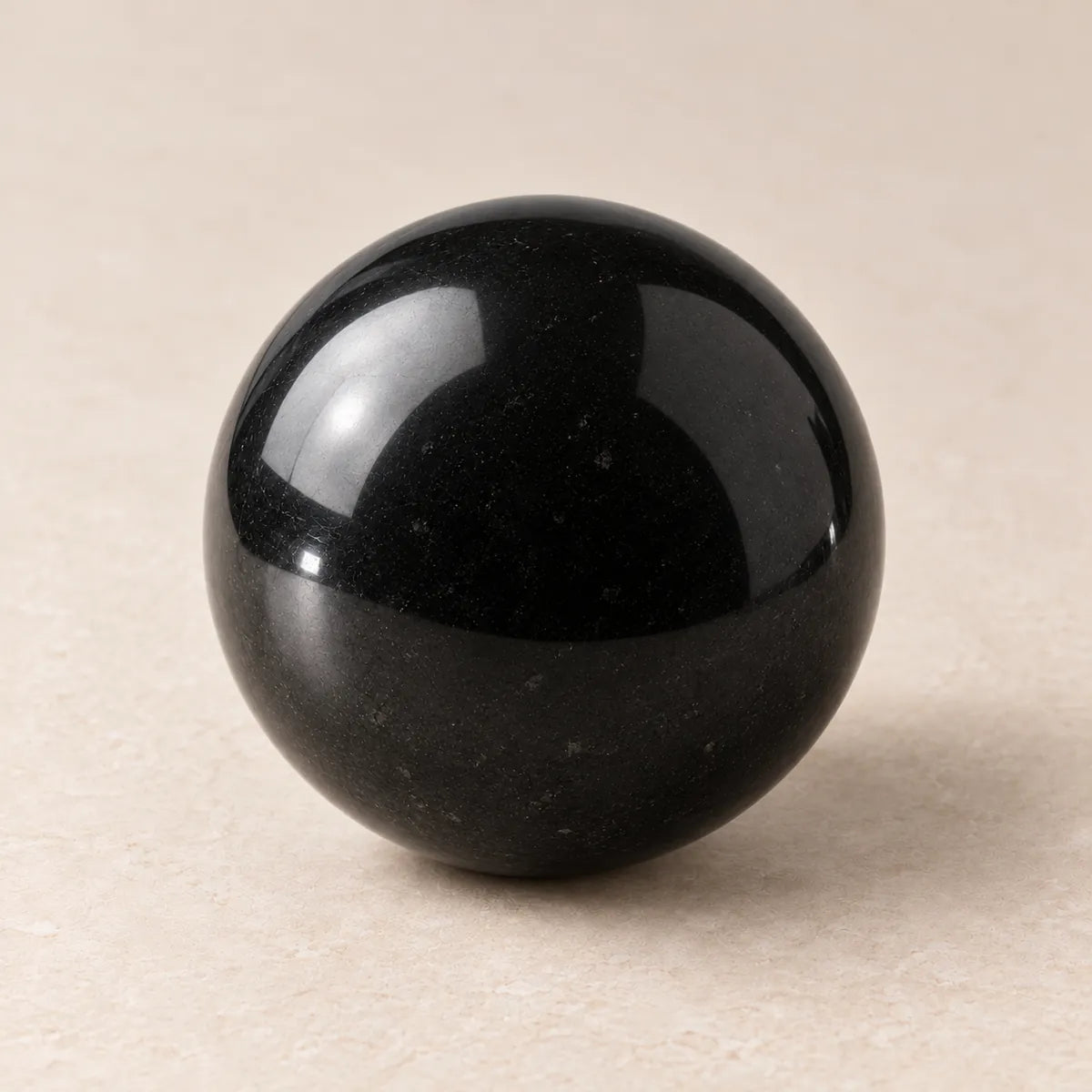
a smooth surface that reflects light like a mirror.
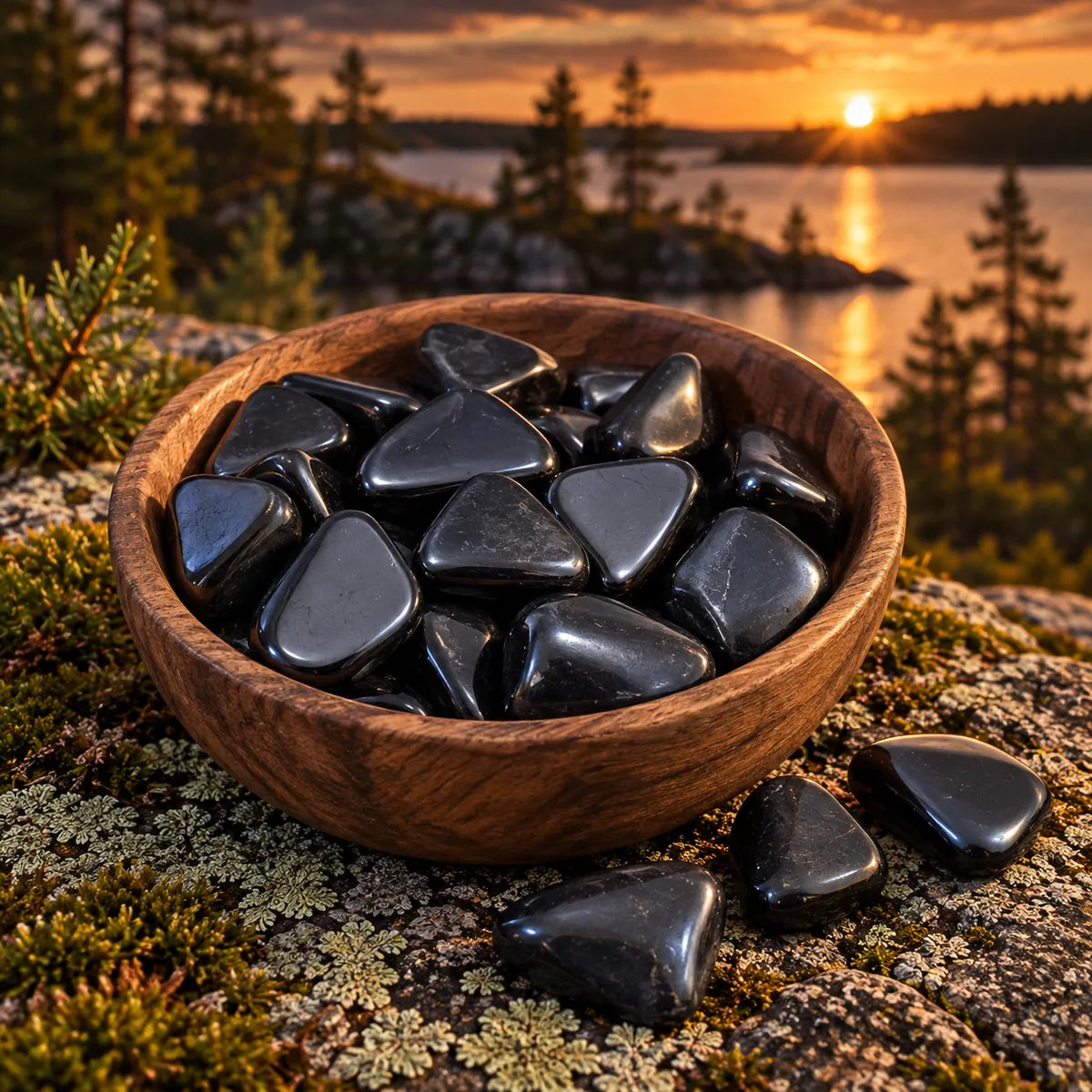
pebbles that turn for a long time in a drum and come out smooth and rounded.

a light, matt engraving on the polished stone, such as the Flower of Life; on the pendants with the Om or the Tree of Life, the background is engraved and the symbol stays black and shiny.
Shungite is rich in carbon, minerals and traces of metals such as pyrite: in contact with water or skin it can leave dark residue.
This is normal and not a defect: it is proof that the stone is genuine.
It washes off your hands with soap and water.

Élite shungite is a natural mineral, made up mainly of carbon. Even though it may have a light patina of oxide, it does not lose its unique properties.
Why does it happen? It is due to pyrite and other minerals, which can oxidise over time.
It is not a defect: the patina does not affect the quality or the effectiveness of Élite shungite.
What should you do? If you wish, clean it gently with a soft, dry cloth. Or leave it as it is: its energy stays the same.